
Aqara for Hotels and Resorts: Six System Layers to Plan First
A hospitality-oriented architecture covering networking, access and security, room experience, HVAC and energy, management and maintenance.

Smart Home design for hotels and resorts differs from residential projects because it must serve guests, front-desk staff, housekeeping, technicians and operations management at the same time. A visually impressive sample room is not enough; the system must scale across many rooms while remaining easy to troubleshoot and maintain.

1. Network infrastructure and technical zones
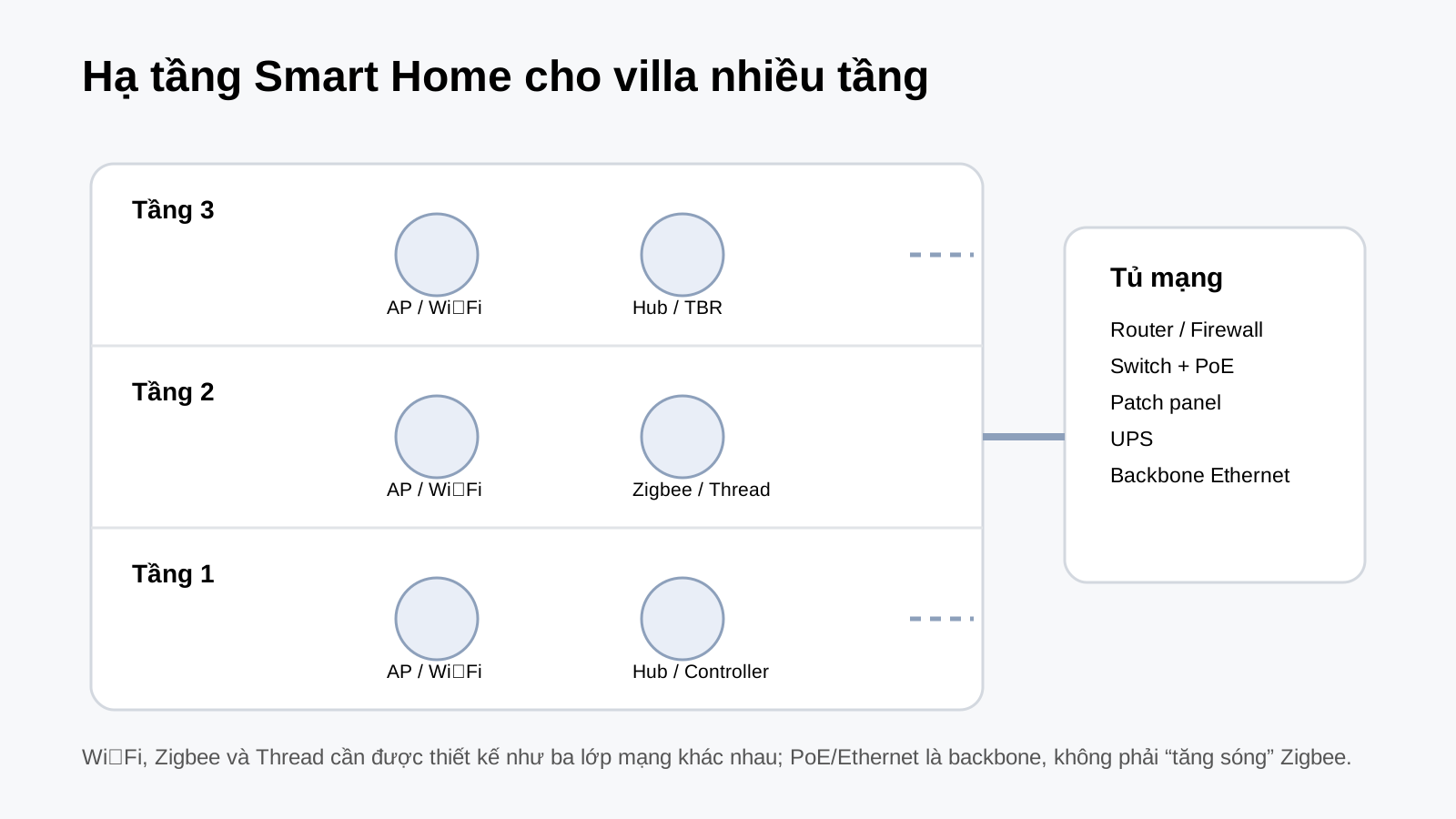
Ethernet, Wi-Fi, PoE, hubs/controllers, Zigbee/Thread and power should be documented by floor and zone. A resort with multiple villa blocks should treat each block as its own technical zone and then integrate those zones into a shared management layer rather than attempting to stretch one mesh network across the entire property.
2. Access control and security
Locks, door state, alarms and cameras need to follow role-based permissions. Guest access is different from housekeeping or technician access. Camera placement also needs to respect privacy and the property's operating policies; devices should not be installed in private areas merely because the location is technically convenient.
3. The room experience must work without requiring an app
Lighting, curtains, HVAC and scenes need clear physical controls. Scenes such as Welcome, Relax, Sleep and All Off are only useful when guests can understand them immediately and automation does not prevent normal manual control.
4. HVAC and energy efficiency
Presence, door state and check-in/check-out schedules can be used as conditions for HVAC and lighting logic. A fixed energy-saving percentage should not be promised without a baseline, HVAC type, setpoints and real operating data.
5. Centralized management and integration
Commercial projects need to know which devices belong to each room, which firmware version is running, who can change configuration and which automations affect the room. If API, PMS or installer-platform integration is required, the exact integration scope and version should be confirmed at deployment time.
6. Maintenance should be designed from the beginning
- Use a consistent naming convention for floors, rooms and devices.
- Maintain mapping for model, location and controller.
- Document important scenes and automations.
- Define a process for replacing a node within one room or zone.
- Maintain backups according to the capabilities of the platform.
- Control administrator accounts and permissions.
- Keep spare units for critical models when the required SLA justifies it.
Official Aqara reference case: Episode Yongsan 241
The source article records Aqara's IFA 2026 material describing Episode Yongsan 241 in Seoul using hubs, door locks, smart plugs, temperature/humidity sensors, motion sensors and presence sensors. Functions include fingerprint access, environmental monitoring, heating control based on temperature/humidity and sleep-state awareness. Aqara also describes API integration with a property-management system for real-time device monitoring and remote operation. This is an international reference case, not a Da Nang or Hoi An project.

Suggested rollout process
- Finalize use cases, MEP/HVAC/network requirements and room standards.
- Build a sample room or sample-room cluster.
- Let front-desk, housekeeping and technical teams test the system during realistic operating shifts.
- Refine UX, automation and documentation.
- Roll out zone by zone using a repeatable acceptance checklist.
- Hand over accounts, diagrams, backups and incident procedures.
Notes for Da Nang and Hoi An
Hot, humid conditions and intensive air-conditioning use mean that HVAC, door/presence sensing, networking and maintenance should receive particular attention. For resorts with multiple buildings, lightning risk, backup power and inter-building network links should be considered together with the Smart Home design.
Do hotel guests need to install Aqara Home to use the room?
The core room experience should not depend on guests installing an app. Physical controls and in-room UX should be intuitive enough for normal use.
Can one hub be used for an entire hotel?
This should not be assumed. Large systems should be divided into technical zones to improve fault isolation and maintenance.
Practical Application with Aqara in Da Nang
Use this topic as part of a wider system design: verify the exact Aqara device, hub, network and target ecosystem before installation.
Explore More of the Aqara Ecosystem
Explore the core pages to understand how devices, protocols and ecosystems fit together in a complete smart-home system.
Related Articles
Consulting & Solutions
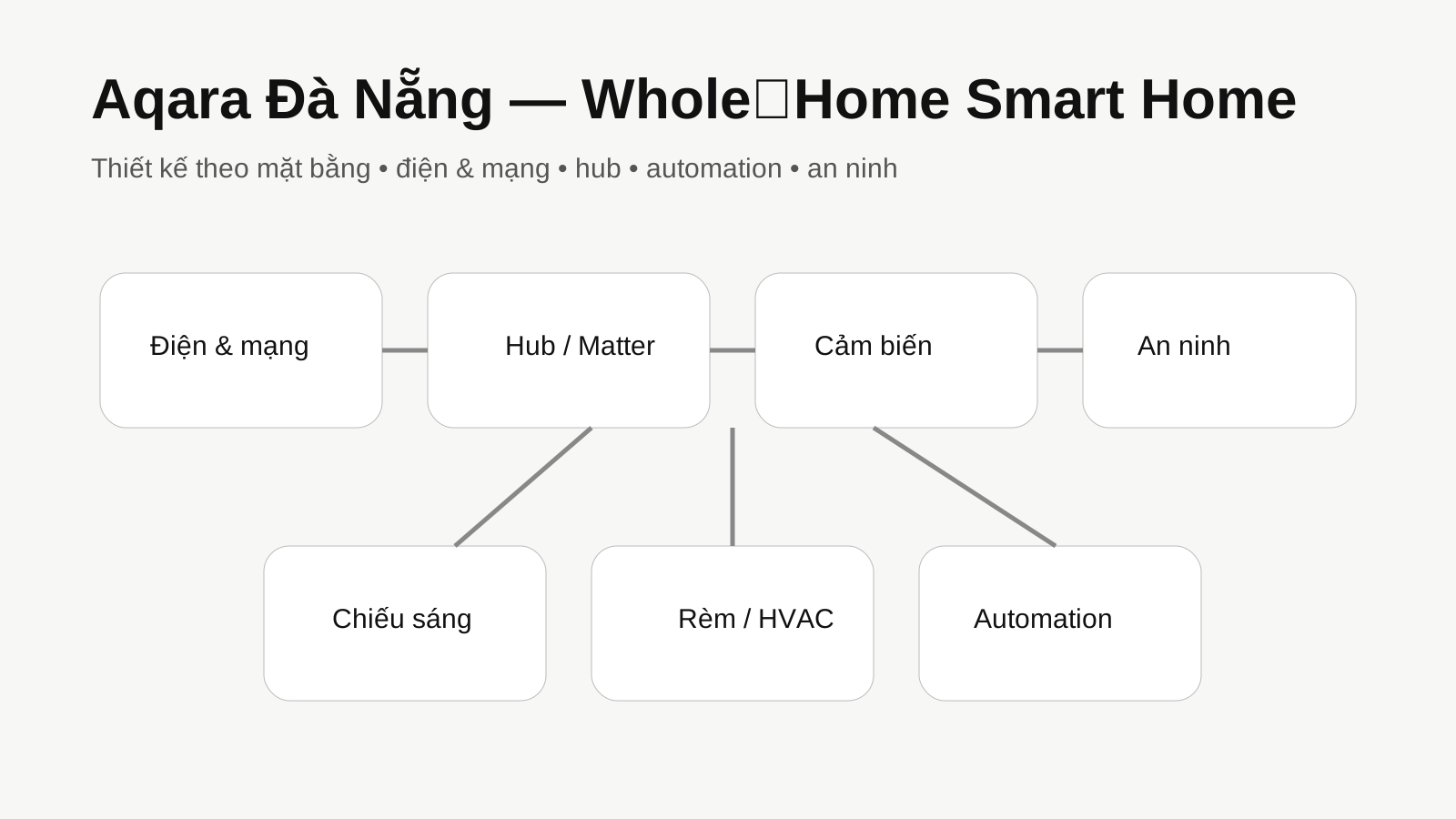
Aqara Da Nang: Smart Home Solutions for Apartments, Townhouses and Villas
Consulting & Solutions
Network Infrastructure Design for an Aqara Smart Villa in Da Nang

Aqara News
Aqara Smart Lock U400: UWB, Home Key, Matter over Thread and Compatibility Notes
Aqara Events
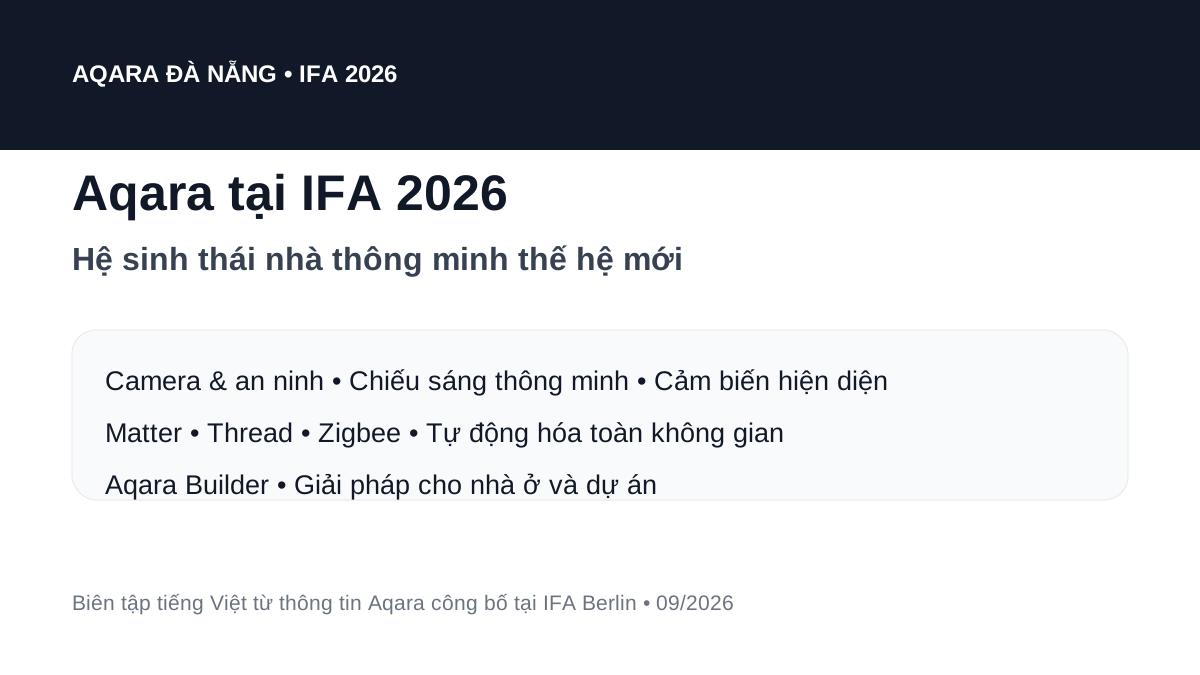
Aqara at IFA 2026: G510/M410, FP400, M300 and New Smart Lighting
Aqara Smart Home Consultation
Need help choosing devices or planning a smart-home solution for your project? Contact Aqara Da Nang for project-specific guidance.
Request Consultation